Traceability and Compliance: Why Food & Beverage Leaders Are Choosing Infor ERP M3
January 19, 2026
Why Certified Infor Partners Matter for ERP Success
February 20, 2026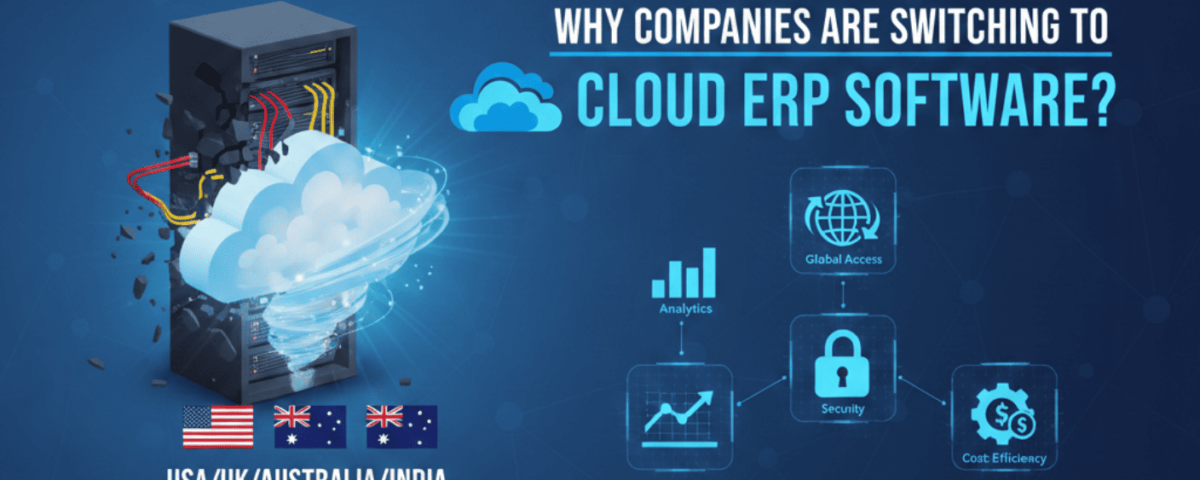
Why Companies in the USA/UK/Australia/India Are Switching to Cloud ERP Software?
India's vibrant markets are not the only ones where businesses are having to change their core operations.
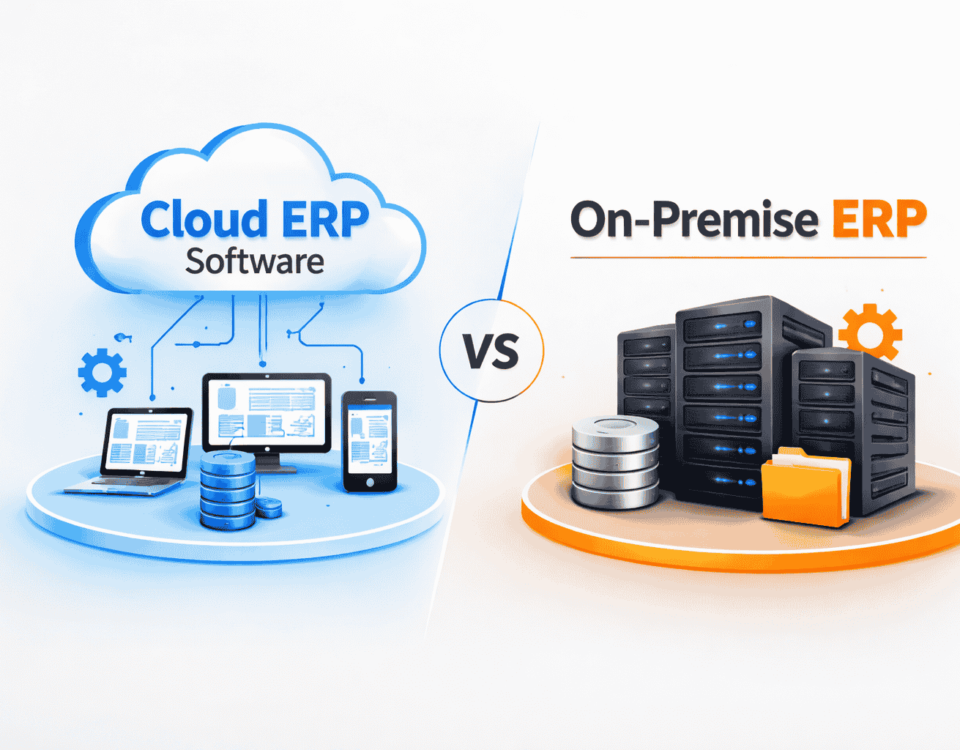
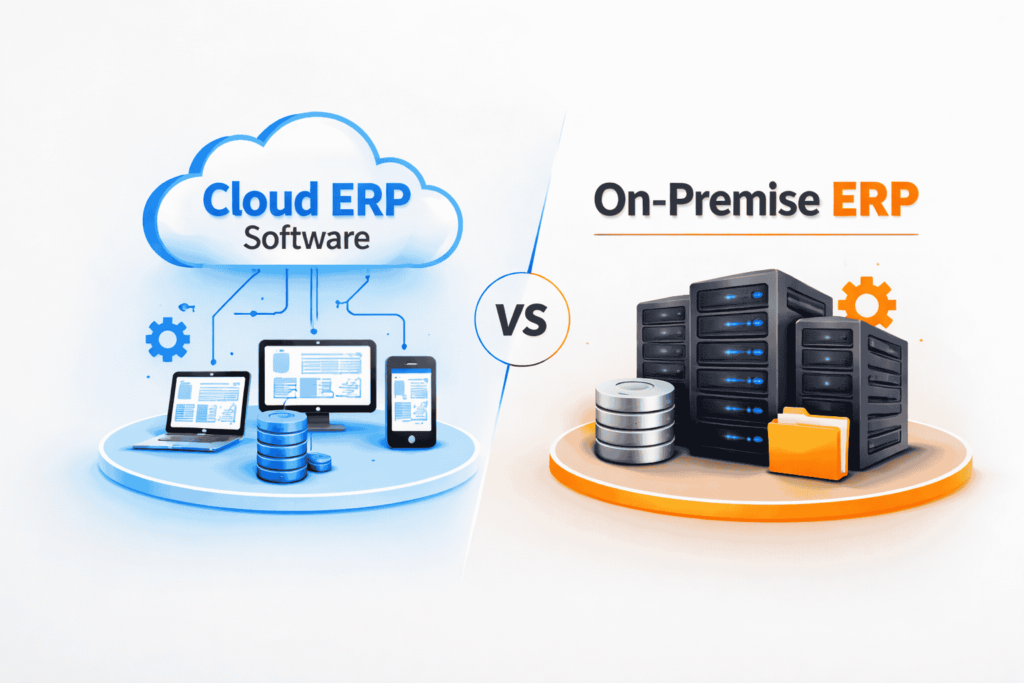
The trend is just as evident in the USA, UK, and Australia. Cloud ERP Software is gaining popularity over the traditional on-premises Enterprise Resource Planning (ERP) systems at a fast pace. The immense cloud ERP usage is indicating a major change and not just a passing trend. The push for a tech-savvy future with flexible, less expensive, and more accessible technology has resulted in the switch being made from traditional ERP systems to Cloud ERP.
The Irresistible Economics of Cloud ERP
One of the most compelling drivers for the switch to Cloud ERP Software is the significant reduction in costs and the advantageous shift in capital expenditure. In case of ERP software USA, the company had to make a big upfront payment for hardware, servers, and software licenses before using cloud ERP software in the UK.
- Lower Upfront Costs: Cloud ERP works on a subscription (SaaS) model that turns a high capital expenditure (CapEx) of a project into a predictable and lower operating expense (OpEx) that is spread out over time. This new startup and mid-sized companies (SMBs) entry barrier is relatively small in India and Australia, thus, it is life-changing, providing access to enterprise-level capability.
- Reduced IT Overhead: System maintenance, updates, and hardware are the responsibility of the cloud provider. This reduces the need for very large in-house IT teams whose main function is to ensure proper functioning of servers, apply patches, and maintain security. Consequently, the company can utilize a portion of its resources for business development activities.
Agility, Scalability, and Global Reach
All modern global companies, no matter if they are a big manufacturing company or a tech start-up, require systems that can be rapidly scaled and also provide a remote workforce support.
- Limitless Scalability: Cloud-based solutions, such as those used worldwide for ERP software in India and other countries, come with the proposition of boundless scalability. A firm can scale up its resources (users, storage, and functionality) on the spot, either up or down, and for any reason—fluctuating demand in the market or acquisition-induced rapid growth—without the need for getting new hardware or going through long implementation cycles.
- Anytime, Anywhere Access: There is a trend in the USA and UK towards more remote and hybrid workforces. Thus, the ability to access cloud ERP software in the USA, cloud ERP software in the UK, or cloud ERP software in India from any device with an active internet connection is essential. This effectively lifts collaboration, business continuity, and operational efficiency to a whole new level.
- Faster Deployment: The time frame for a Cloud ERP software implementation is usually very short in comparison to that of an on-premises system, which can take a year or even more. The fast deployment results in a quicker ROI for the company and faster time-to-value.
Access to Advanced Technology and Innovation
Firms have no choice but to implement the latest technological innovations if they are to remain competitive. The trend towards the use of Cloud ERP solutions as the basis for the digital transformation is very strong.- Continuous Innovation: On the other hand, on-premises systems are limited in their functionalities due to the cost of frequent updates, while the vendor takes care of the updating in a non-intrusive way through the cloud ERP software. Therefore, users can automatically get the most recent features, security patches, and compliance regulations anyway.
- Integrated Intelligent Tech: The cloud services are specifically engineered to support the integration of new technologies. Companies are making use of the integrated tools like AI, Machine Learning (ML), and advanced analytics for real-time reporting and predictive forecasting, etc. This is crucial for ERP in manufacturing as it enables lean operations by providing real-time visibility into the supply chain, production lines, and inventory management.
- Superior Security: In contrast to the prior doubt, the significant cloud vendors generally offer security that exceeds what the average company can effectively manage in-house. They allocate billions to state-of-the-art encryption, robust data centers, and continuous specialized security teams, thereby addressing the primary issues related to data security and compliance.
The Global Mandate
The cloud ERP Software transition covering the entire USA, UK, Australia, and India signifies a global trend towards digitization, modernization, and attaining operational excellence. From multinational corporations needing to manage different currencies and subsidiaries to ambitious SMBs seeking to gain a competitive advantage, businesses of all sizes are adopting the cloud model, which provides the necessary flexibility, security, and technological platform to flourish in today's business environment. For firms, the transition to the cloud is no longer a matter of if, but of when, as they seek to make their operations future-proof and drive the next wave of productivity.